
01
Creating, Imagining, Innovating
Children produce original solutions through S.T.E.A.M play and open-ended exploration.

The Philosophy
The framework hands children a reliable set of thinking dispositions — not facts to memorise, but practical ways of meeting difficulty, uncertainty, and the unfamiliar head-on.
A World-First
Singapore's Ministry of Education uses this same framework for its top 1% of students. We bring it to children from the very beginning.
12
Habits of Mind™ in our curriculum
16
Total dispositions in the framework
4
Ways we make habits stick every day
1st
Certified preschool network globally
The early years form a child's very first instincts about learning itself — whether effort is worth it, whether being wrong is safe, whether challenges are worth facing at all.

Building Bright Minds
Of the 16 habits in the full framework, we have curated 12 that are mindfully infused into our curriculum — through planned lessons, spontaneous teachable moments, and the natural rhythm of the school day.
Swipe to explore all 12 habits
A true habit — the kind that shows up automatically under pressure — takes more than a single lesson. Here is how we weave it into the full fabric of each child's day.
Each month, one habit is introduced through specially designed activities, paired with catchy slogans that children carry into the rest of their day — and their lives at home.
From lunchtime to wash-up, teachers watch for the right moment to gently surface the current habit — naming the behaviour, repeating the slogan, making the connection in real time.
We update parents regularly on how their child is demonstrating each habit. Dedicated parenting workshops give families the tools to extend learning beyond the school gate.
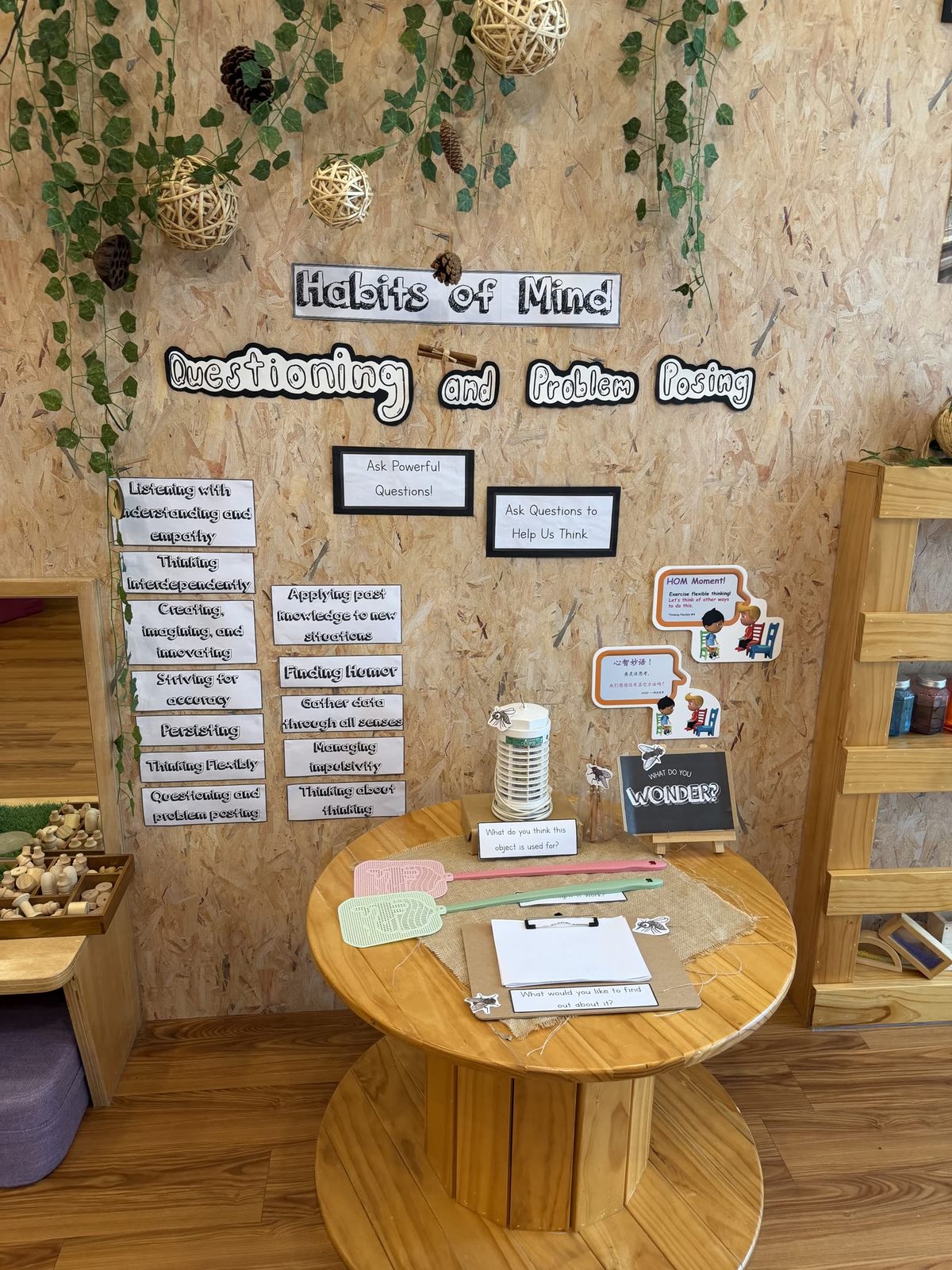
Habits of Mind™ posters line every corridor. Teachers model the habits themselves. Each month, a HoM Little Ambassador is chosen and celebrated by their peers.
This is not a test with a score. It is a window into how your child actually thinks and a tool that helps us teach them better.

A 30-minute walkthrough with our principal. All questions welcome.